

, exam pattern, and step-by-step registration guide..avif)
Download Gyan Bharat App
Download


5/28/2026
Every year, lakhs of students from villages and small towns dream of becoming doctors, engineers, teachers, scientists, civil servants, and defense officers. But many of them face the same challenge from the very beginning — lack of quality education, limited resources, weak English exposure, and financial pressure at home.
In many rural areas, students still study in schools where classrooms are overcrowded, science labs are limited, and access to competitive exam guidance is almost absent. Parents often cannot afford expensive private schools or coaching institutes. As a result, talented students lose opportunities not because they lack ability, but because they lack support.
This is exactly the gap that Navodaya Vidyalaya was created to fill.
Jawahar Navodaya Vidyalayas (JNVs) are residential schools established under the Ministry of Education, Government of India. These schools were introduced through the National Policy on Education (1986) with one clear objective — to identify talented rural students and provide them with quality education free of cost.
Today, Navodaya Vidyalayas are considered among the most successful school education models in India. Thousands of students from economically weaker backgrounds have used JNV education as a stepping stone to IITs, NEET medical colleges, NDA, UPSC, and other competitive careers.
The impact is visible in real numbers.
According to Navodaya Vidyalaya Samiti data, more than 650 Jawahar Navodaya Vidyalayas are functioning across India. Most of the seats are reserved for rural students, ensuring equal opportunity for children from villages. The schools provide free education, boarding, lodging, textbooks, uniforms, and sports facilities.
For many families, this changes everything.
A student who once studied in a small village school suddenly gains access to science labs, digital classrooms, libraries, experienced teachers, structured discipline, and national-level competition exposure. The difference in confidence becomes visible within a few years.
But despite these achievements, many students and parents still do not fully understand how Navodaya schools work, how admissions happen, what benefits students receive, and why JNV students consistently perform well in academics and competitive exams.
This article explores the complete reality of Navodaya Vidyalaya — from admission process and facilities to academic performance, student life, success stories, challenges, and career outcomes.
More importantly, this article explains why Navodaya Vidyalayas continue to be one of the strongest education systems for rural India.
Jawahar Navodaya Vidyalaya (JNV) is a system of central government residential schools created mainly for talented students from rural India. These schools are managed by Navodaya Vidyalaya Samiti under the Ministry of Education.
The schools follow the CBSE curriculum and provide education from Class 6 to Class 12.
The core idea behind Navodaya schools is simple:
A child’s future should not depend on whether they are born in a metro city or a small village.
Before Navodaya schools were introduced, students in rural regions often lacked access to quality secondary education. Urban students had coaching institutes, English-medium schools, libraries, and exposure to competitive exams. Rural students rarely had such opportunities.
Navodaya schools attempted to bridge this gap by creating a residential education system where selected students receive modern education without financial burden.
Today, JNVs operate in almost every district of India.
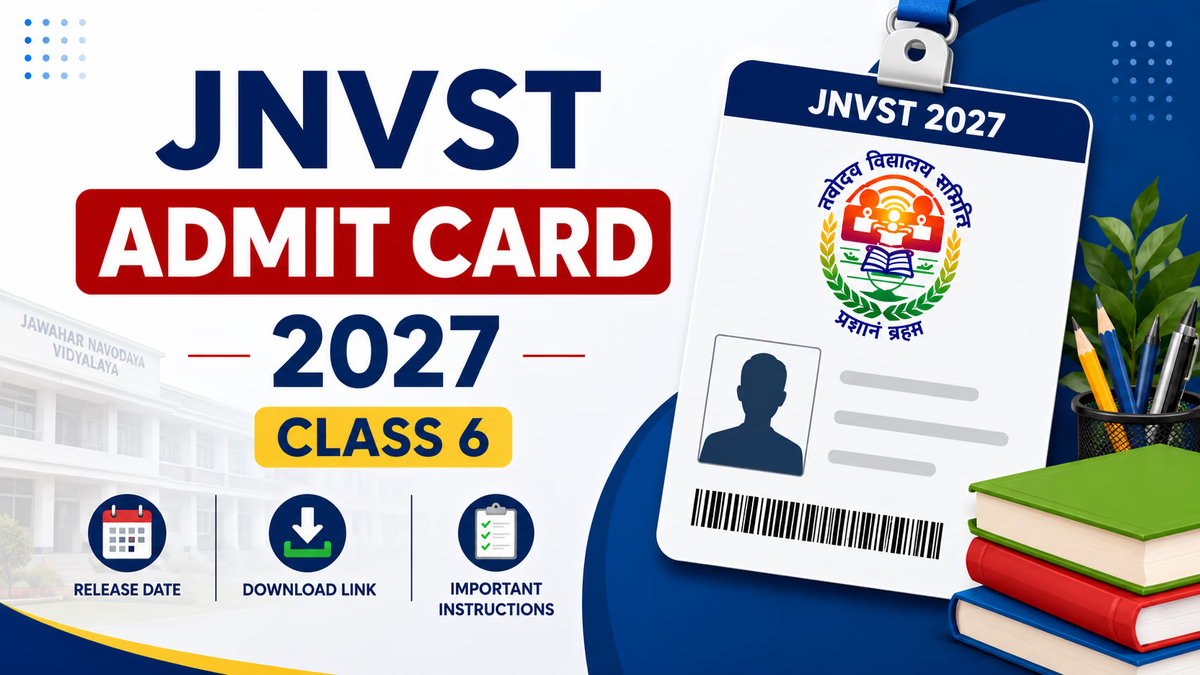
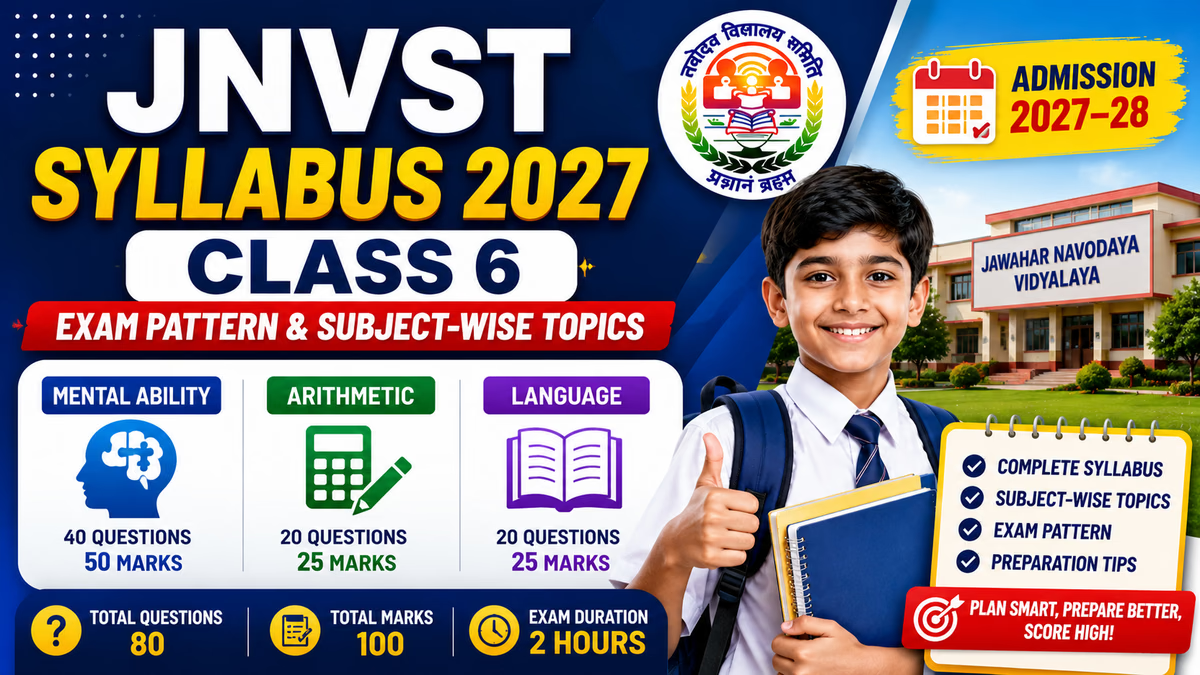
The admission process begins through the Jawahar Navodaya Vidyalaya Selection Test (JNVST), conducted mainly for Class 6 admissions. Students are selected based on merit, and a large percentage of seats are reserved for rural candidates.
One of the biggest strengths of Navodaya schools is that education remains almost completely free for students.
Facilities generally include:
This reduces financial stress on families and allows students to focus completely on studies and personal development.
To understand the importance of Navodaya Vidyalaya, it is necessary to first understand the problems faced by rural students in India.
In many villages, students continue to face issues such as:
According to several education surveys conducted in India, learning gaps between urban and rural students remain significant in mathematics, science, and English proficiency.
This creates long-term disadvantages.
A talented student may score well in school exams but still struggle during national-level competitive exams because of lack of preparation environment.
For example:
A student preparing for NEET or JEE requires:
Most rural schools cannot consistently provide this ecosystem.
Navodaya Vidyalayas solve many of these problems through a structured residential model.
Students study, eat, practice sports, and prepare together in a competitive environment. This creates discipline, consistency, and peer learning.
The environment itself becomes a major advantage.
One question is commonly asked:
Why do so many Navodaya students succeed in exams like IIT-JEE, NEET, NDA, CUET, and UPSC?
The answer is not luck.
It is the result of a system.
Navodaya schools focus heavily on conceptual clarity. Since CBSE curriculum is followed, students develop familiarity with NCERT books from an early stage.
This becomes extremely important for NEET and JEE preparation because most questions are directly or indirectly linked to NCERT concepts.
Students follow fixed routines:
This structured routine helps students avoid distractions and maintain consistency.
When students live among academically focused peers, competition naturally increases.
A student preparing seriously for NEET motivates others around them. Over time, the entire academic culture improves.
Many JNV teachers provide additional guidance beyond classroom teaching.
Students preparing for Olympiads, NTSE, JEE, and NEET often receive extra academic support and mentorship.
Because food, accommodation, and schooling are free, families can focus resources on higher education planning rather than school expenses.
This reduces emotional pressure on students.
Admission to Navodaya schools mainly happens through the Jawahar Navodaya Vidyalaya Selection Test (JNVST).
The exam is conducted for:
The Class 6 entrance exam is the most popular.
Students generally must:
Rural reservation is one of the most important features of JNV admissions.
At least 75% of seats are reserved for rural candidates.
This ensures that village students receive priority access.
Many parents think Navodaya schools are only about studies. But student life inside JNVs is much broader.
A typical day often includes:
Students learn:
Because students come from different social and linguistic backgrounds, they also develop adaptability and confidence.
Several former students mention that hostel life at Navodaya taught them independence at an early age.
Consider the example of a student from a farming family in Bihar.
Before entering Navodaya school, the student studied in a local village school with limited facilities. English communication was weak, and exposure to competitive exams was minimal.
After clearing JNVST and entering Jawahar Navodaya Vidyalaya in Class 6, the student gained access to:
Over the next several years, the student developed strong academic fundamentals and eventually qualified for IIT-JEE.
Stories like this are common across many Navodaya schools.
The key takeaway is not that every student reaches IIT.
The real achievement is that students receive opportunities that previously seemed impossible.
Despite their success, Navodaya schools also face challenges.
Some common issues include:
Students coming from regional-medium backgrounds sometimes struggle initially with English-medium education.
However, most students gradually adapt through peer learning and teacher support.
Many parents compare Navodaya schools with private schools.
Private schools may offer:
But Navodaya schools offer something unique:
For economically weaker families, Navodaya often becomes a life-changing opportunity.
Education changes economic conditions slowly but powerfully.
For thousands of families, Navodaya education becomes the first step toward:
When one student succeeds, the impact spreads across the entire family and village.
Younger children become motivated.
Parents start valuing education more seriously.
Communities begin encouraging school participation.
This creates long-term social impact beyond individual success.
Navodaya Vidyalaya is more than a school system.
It is an opportunity structure for rural India.
The schools were created to ensure that talent is not limited by geography or financial condition. Over the years, thousands of students from villages have used this platform to enter professional careers, national institutes, and government services.
The success of Navodaya schools proves an important point:
When students receive proper guidance, discipline, resources, and equal opportunity, their background does not decide their future.
For parents and students preparing for JNVST, the goal should not only be admission into a good school.
The larger goal should be using that opportunity to build confidence, discipline, knowledge, and long-term career growth.
In a country where educational inequality still exists, Navodaya Vidyalayas continue to show how structured public education can transform lives.